Pixel Film Studios today introduces TypeDust — a GPU particle title plugin for Final Cut Pro that builds text out of thousands of individual dust particles, animates them sweeping in to form letters, holds them as the title reads, then scatters them apart as the clip ends. The particles move with atmospheric physics: Wind, Turbulence, and Wave for flowing environmental motion; Buoyancy, Force, and Drag to shape how particles rise, fall, and resist movement. Five instant looks and nine studio lighting styles set the visual character — from a sparse cinematic drift to a dense storm — and four grain options give the dust texture at the particle level. Real-time 4K. Universal binary. $29.95.
Particle text effects — titles built from many small elements that assemble and disperse — have been a staple of cinematic motion graphics since compositing software made them possible. They carry a specific visual weight: the sense that the words themselves are made of something physical and temporary, that the title is not just placed on screen but conjured there and then released back to the air. Producing them in Final Cut Pro has historically required either rigid preset templates with fixed looks and limited controls, or a round-trip into a compositing application. TypeDust is the first particle title tool built natively for FCP that combines a real physics engine with the flexibility to create anything from a subtle atmospheric drift to a dramatic storm formation.
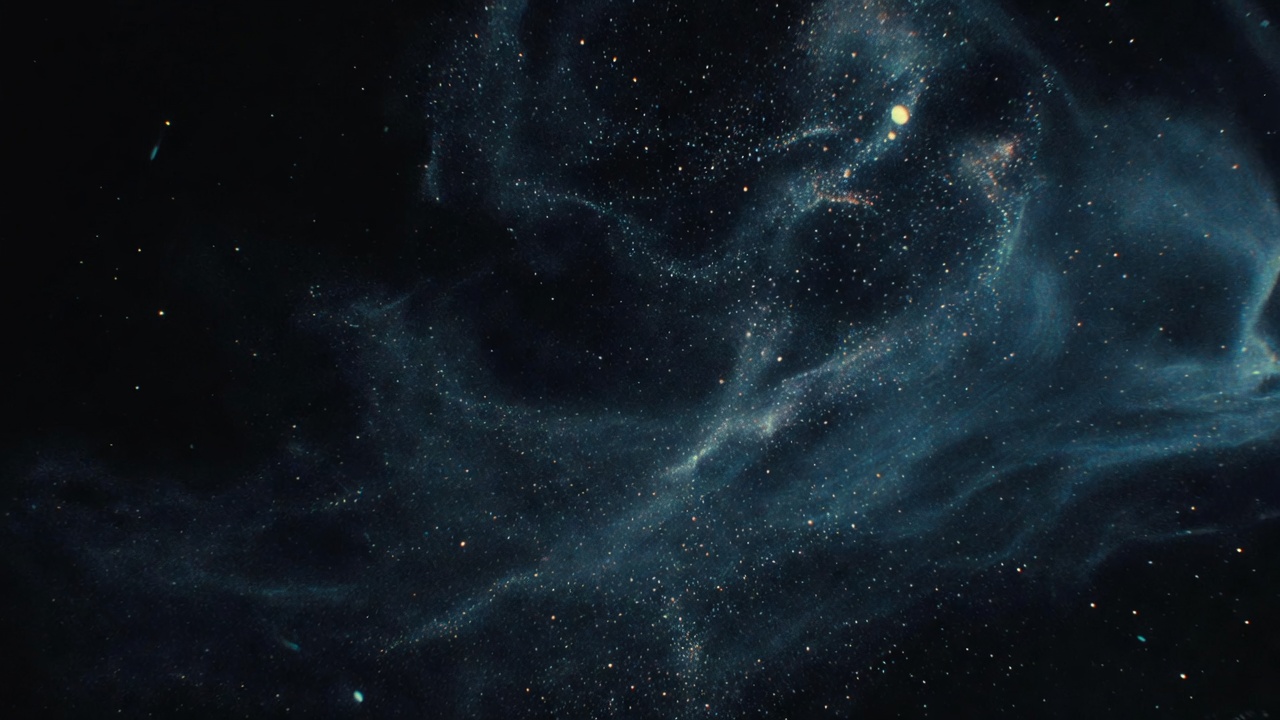
The Particle Engine: Thousands of Particles, One Word
TypeDust rebuilds every letter from thousands of individual particles rendered on the GPU. Each particle is a discrete element with its own position, velocity, and trajectory — not a texture mapped onto a shape, but an actual point in space that the GPU tracks, moves, and renders independently through the full arc of the animation. The result is text that feels genuinely assembled and dispersed rather than wiped or faded: particles arrive from the atmosphere, slow as they find their position in the letter form, hold as the title reads, and then release back into motion as the clip ends.
Text reveals by character, word, line, or all at once. Reveal sequences move left to right, center outward from the middle of each word, or in a seeded random pattern that varies the order of character formation while remaining consistent across renders with the same seed value. The timing of formation — how long each character takes to assemble from its incoming particles — is adjustable, as is the hold duration and the scatter timing at the end of the clip.
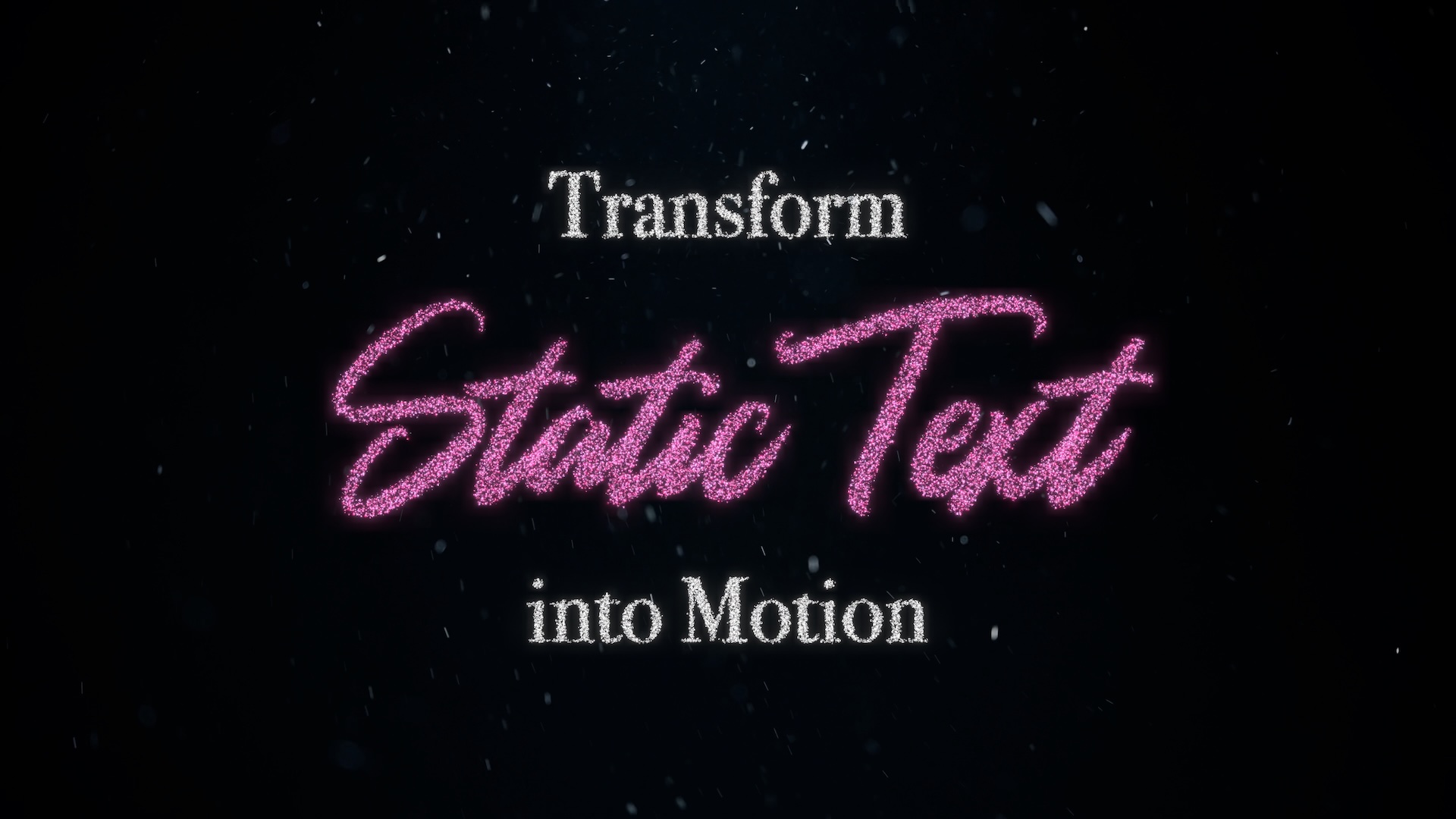
Atmospheric Physics: Dust That Moves Like Dust
Six physics parameters control the environmental forces acting on every particle throughout the animation — not just during the formation and scatter phases, but continuously, so the held title has the subtle drift and movement of dust caught in a real atmosphere.
- Wind — applies a directional force to all particles, pushing them laterally across the frame. A gentle Wind setting creates the impression of a light breeze carrying dust past the camera; a stronger setting produces horizontal drift that reads as exposure to real air movement.
- Turbulence — adds non-directional chaotic variation to particle paths. Where Wind moves everything in one direction, Turbulence introduces the irregular, unpredictable swirling that characterizes real suspended dust — individual particles breaking off from their neighbors and following their own diverging trajectories within the overall flow.
- Wave — applies a rhythmic, oscillating force that causes particles to move in flowing, undulating patterns. Wave creates the specific motion of dust rising and falling in slow thermal currents — a sinusoidal movement that reads as atmospheric and organic rather than mechanical.
- Buoyancy — controls the vertical tendency of particles. Positive buoyancy causes particles to rise as if warm air is lifting them; negative buoyancy causes them to settle and fall as if they are heavier than the surrounding air. Buoyancy shapes whether the dust reads as rising smoke, settling ash, or neutral suspension.
- Force — sets the overall intensity of the physics simulation — how energetically the particles respond to the wind, turbulence, and wave forces acting on them. A low Force value gives a gentle, barely-perceptible drift; a high Force value produces agitated, energetic particle movement.
- Drag — controls how quickly particles respond to and recover from force changes. Low drag produces particles that accelerate and decelerate rapidly, giving a snappy, responsive motion. High drag produces sluggish, heavy particles that build up speed slowly and resist changes in direction — the specific visual quality of dense, massive particles moving through a resistant medium.
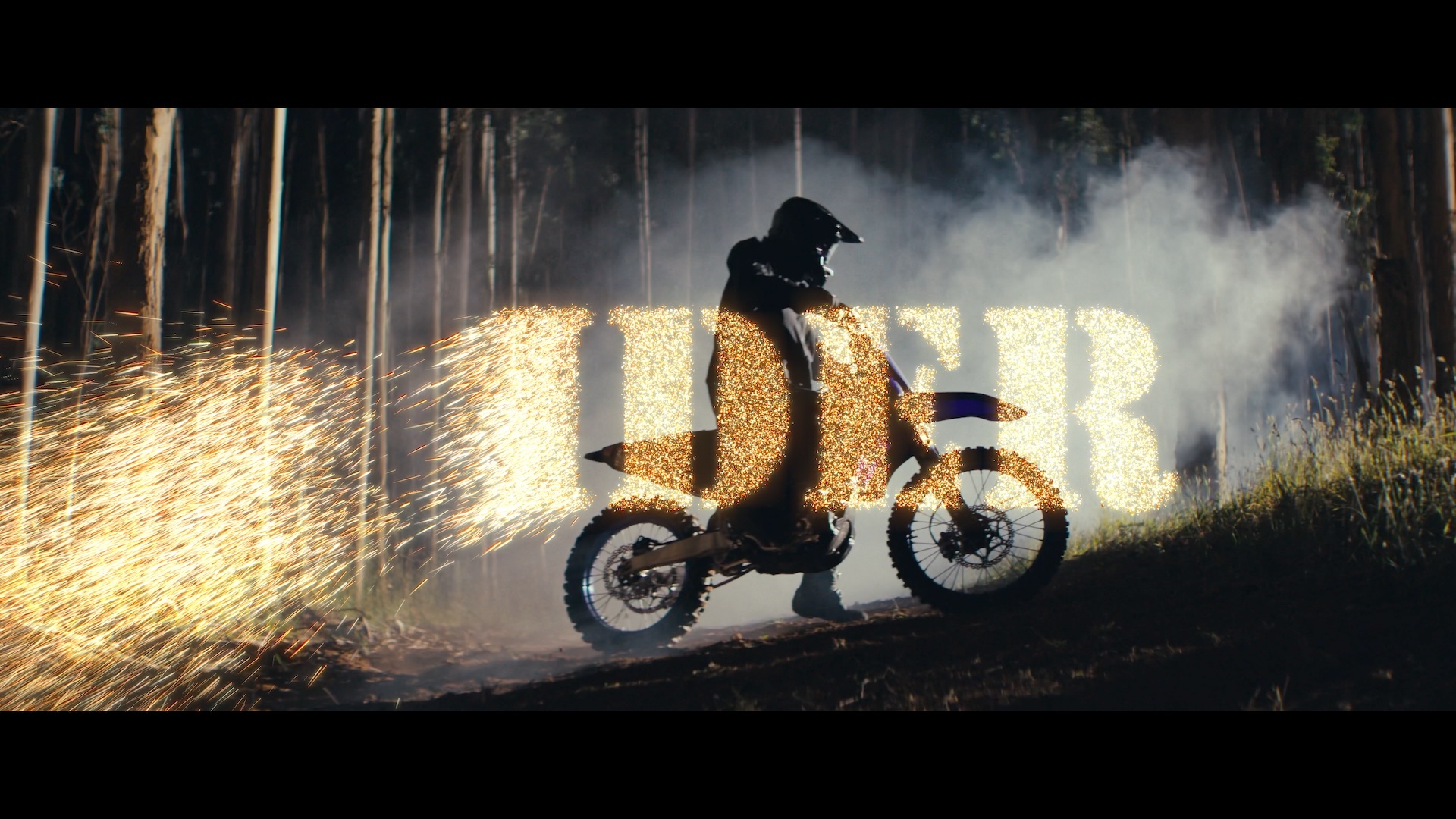
Five Looks, Nine Lighting Styles
TypeDust ships with five instant looks that configure the full visual character of the particle system — particle size, density, color, scatter behavior, and physics settings — as a single selection. From a sparse, wispy drift of fine particles to a dense, churning storm of heavier material, the five looks span the range of common cinematic dust aesthetics without requiring individual parameter adjustment.
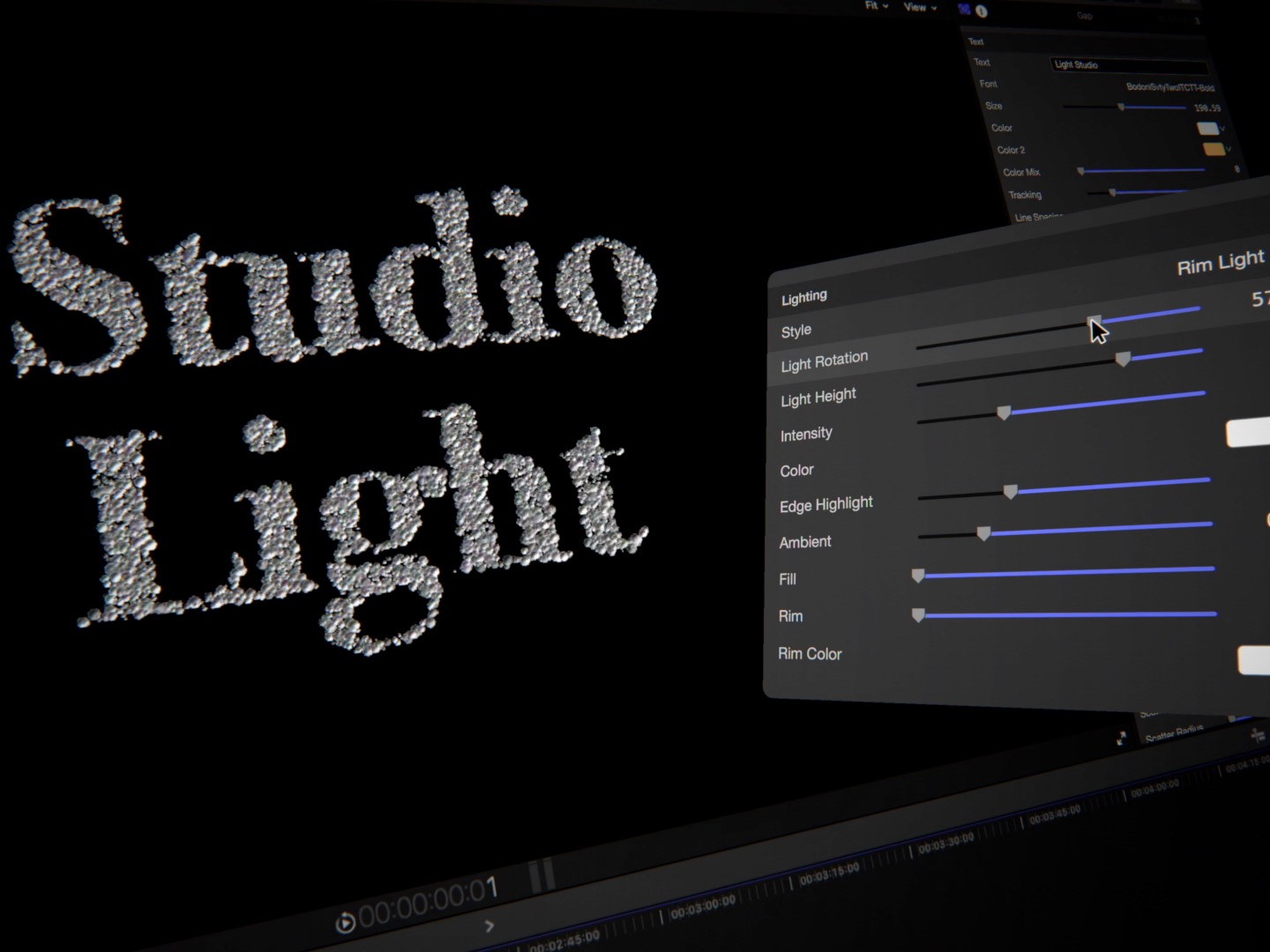
Nine studio lighting styles illuminate the particles from different angles and with different color temperatures. Because TypeDust particles are rendered as three-dimensional points in GPU space rather than flat sprites, the lighting model responds to the angle and intensity of each lighting style the way physical particles would — particles facing the light source appear brighter, particles in shadow appear darker, and the overall depth of the particle field becomes visible as the lighting differentiates near and far elements. The nine styles cover the full production range from clean neutral setups to warm golden side-lighting, cool blue fills, and dramatic backlighting that creates rim-lit particle silhouettes against the text form.
Grain: The Look of the Dust Itself
Four grain options shape the visual texture of individual particles — the look of the dust itself rather than how it moves or is lit. Grain ranges from fine, homogeneous particle fields where every point is similar in size and opacity, to coarse, varied fields where particles differ significantly from one another in size and brightness. The grain control produces the difference between a dust cloud that reads as smoke or haze (fine, uniform particles) and one that reads as sand, ash, or heavy debris (coarse, varied particles with visible individual mass).
"TypeDust is about making a title feel like it exists in the physical world — not placed on screen, but assembled there from something real. The particle physics, the lighting, the grain — they're all in service of that one thing. Words made of dust, behaving the way dust actually behaves, lit the way a cinematographer would light a practical particle effect on set."
— Dave Austin, Founder & CEO, Pixel Film Studios
Availability and Pricing
TypeDust is available today at pixelfilmstudios.com for $29.95. One-time purchase, no subscription. Requires macOS Ventura 13.0 or later and Final Cut Pro 10.8 or later. Universal binary — native Apple Silicon and Intel. Installs via the PFS Installer app or by manual download from the customer account page.
About Pixel Film Studios
Founded in 2011, Pixel Film Studios is the leading developer of professional visual effects, titles, transitions, and generators built exclusively for Apple Final Cut Pro and Motion. Over the past 14 years, the company has shipped more than 2,000 products and fulfilled millions of orders for video editors, content creators, broadcast designers, and post-production professionals in over 100 countries. Learn more at pixelfilmstudios.com.
Press Contact
Colin Bauer
Director of Communications, Pixel Film Studios
[email protected]