Pixel Film Studios today introduces Audio Environments — a five-engine spatial audio plugin for Final Cut Pro that runs entirely inside the inspector with zero latency. Four spatial processing engines — Reverb, Cave, Space, and Echo — flow into a five-band parametric EQ with a live frequency response graph, then through a global Air control that simulates how sound loses brilliance over physical distance. Twenty-six factory presets cover everything from a recording booth to an alien world. One purchase, no subscription, free updates for life.
Adding convincing spatial depth to audio inside Final Cut Pro has always required either a trip into Logic Pro or a chain of third-party Audio Units stitched together without any visual feedback about how the signal is being shaped. Audio Environments is built as a single, cohesive environment designer — all four spatial engines and the EQ configured together in one inspector panel, with presets that set every engine simultaneously as a complete, coherent sound design decision.
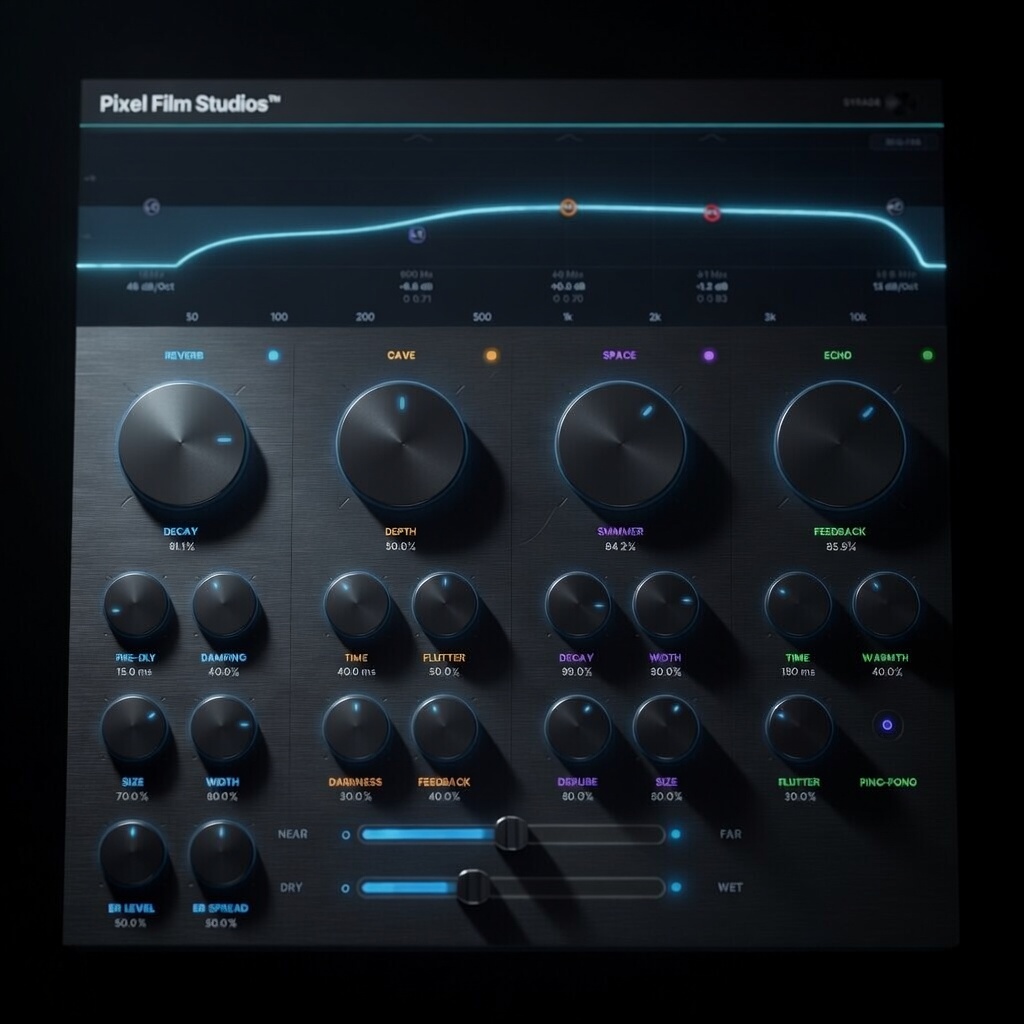
Four Engines. One Coherent Sound.
Audio flows through Audio Environments in a fixed, professional signal chain: Reverb → Cave → Space → Echo → Wet/Dry Mix → 5-Band EQ → Air → Output. The order is deliberate — spatial effects are built from the room outward, reverb laying the foundation, modulation and echo layered on top, equalization always last so it shapes the blended result as a whole. Each engine can be independently enabled or disabled; bypassed engines add zero processing overhead.
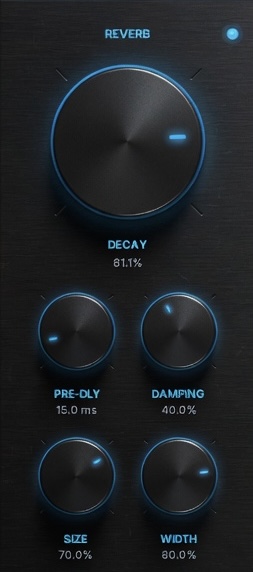
- Reverb — the foundation of every space. A Freeverb architecture using 8 parallel comb filters and 4 allpass filters, with 7 controls shaping decay, pre-delay, damping, room size, width, and early reflection density. From the tight ambience of a recording booth to the long tail of a cathedral, Reverb defines the primary physical space.
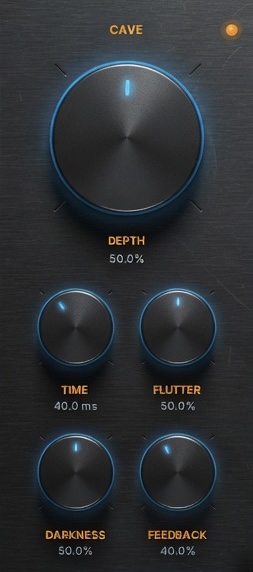
- Cave — depth, texture, and darkness. A modulated flutter echo whose delay position is continuously varied by an LFO, creating the breathe and irregularity of sound trapped in an enclosure. Cave adds the kind of uneven, organic quality that a simple reverb never produces — the sense that the space has physical walls with character.
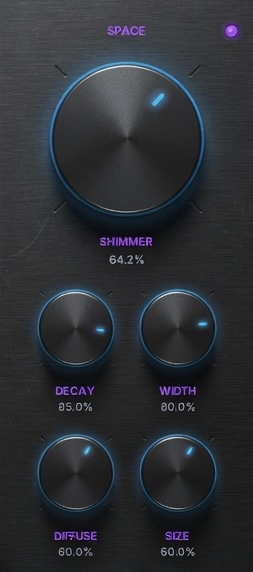
- Space — the sound of the cosmos. Granular pitch shifting with Hann-windowed dual-grain crossfade, feeding a bright shimmer reverb for a cascading, evolving cinematic texture. The engine responsible for otherworldly atmospheres, dream-state ambience, and the infinite shimmer quality used throughout contemporary film and game audio.
- Echo — time, rhythm, warmth. A bandlimited tape echo with an integrated low-pass filter feedback loop and LFO flutter modulation — the organic warmth of machines like the Roland RE-201. Echo adds rhythmic repetition and temporal depth without the clinical precision of a digital delay.
Five-Band Parametric EQ with Live Frequency Graph
The EQ stage sits post-mix in the signal chain — after all four spatial engines have blended their processed signal with the dry source. Five parametric bands with draggable nodes on a live frequency response graph give complete tonal control over the final environment: cut the muddiness that builds up in reverb tails, add brightness to a distant space, shape the proximity effect of a close-mic simulation.
Because the EQ operates on the fully blended output rather than just the wet signal, adjustments affect the dry source and the processed space simultaneously — the dry signal and wet signal always sound like they belong in the same environment. The interactive graph updates in real time as bands are adjusted, providing immediate visual feedback about the frequency shape being applied.
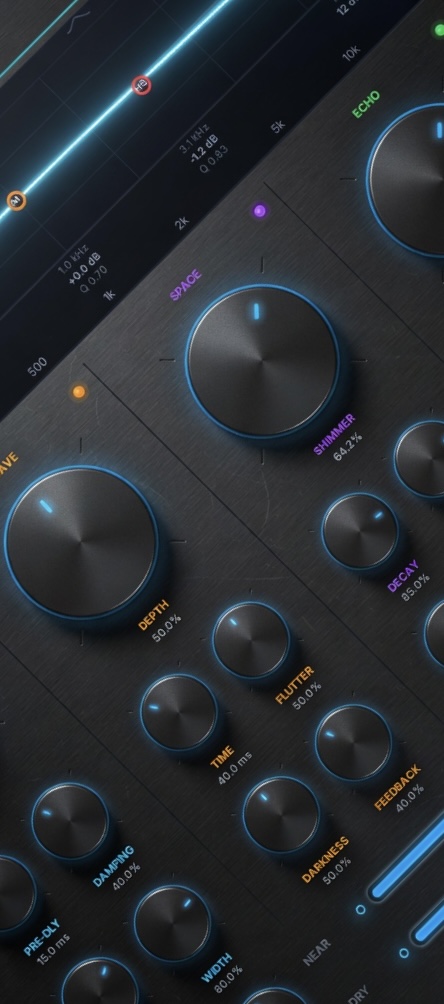
Air: How Sound Loses Itself Over Distance
Physical spaces don't just add reverberation — they absorb high-frequency content. Sound traveling across a large room, through an open-air amphitheatre, or down a long corridor progressively loses brilliance as the air itself attenuates the upper frequencies. Audio Environments models this with the global Air control, which applies high-frequency absorption to the full output after the EQ stage. Increasing Air creates the impression of greater physical distance between the source and the listener — a detail that elevates spatial simulations from technically correct to genuinely convincing.
26 Factory Presets Across Five Categories
Every factory preset in Audio Environments is a complete environment — all four engines, the EQ, Air, and Mix calibrated together as a single, cohesive sound design decision. Twenty-six presets organized across five categories:
- Small Rooms — Booth, Closet, Live Room: intimate spaces with short decay and high early reflection density
- Medium Rooms — Studio, Office, Bathroom: mid-sized spaces with distinct character differences between reflective and absorptive surfaces
- Large Rooms — Concert Hall, Cathedral, Gymnasium: long reverb tails with the specific frequency signatures of hard architectural surfaces
- Atmospheres — Underwater, Cave Drip, Jungle Clearing: environmental ambiences that go beyond room acoustics into textural sound design territory
- Warped — Dream State, Infinite Shimmer, Ghost Room, Alien World: experimental environments using the Space and Cave engines at extremes that produce effects no physical space could create
Every parameter in every preset is adjustable. Load a preset as a starting point and sculpt from there — every knob, every engine enable, every EQ band is fully accessible after the preset loads.
Zero Latency. Real Time. Native Audio Unit.
Audio Environments runs as a native AUv3 Audio Unit inside Final Cut Pro with zero processing latency. The spatial engines and EQ render in real time — scrub the timeline and the effect updates immediately, no pre-render step, no waiting. The plugin appears directly in the Final Cut Pro audio effects inspector and works on any audio clip or role. Compatible with Apple Silicon and Intel, macOS Ventura 13.0 or later, Final Cut Pro 10.8 or later.
Availability and Pricing
Audio Environments is available today at pixelfilmstudios.com for $39.95. One-time purchase, no subscription. Free updates for life — new presets, new engines, and new features are included with the original purchase. Requires macOS Ventura 13.0 or later and Final Cut Pro 10.8 or later. Apple Silicon and Intel compatible. Installs via the PFS Installer app or by manual download from the customer account page.
About Pixel Film Studios
Founded in 2011, Pixel Film Studios is the leading developer of professional visual effects, titles, transitions, and generators built exclusively for Apple Final Cut Pro and Motion. Over the past 14 years, the company has shipped more than 2,000 products and fulfilled millions of orders for video editors, content creators, broadcast designers, and post-production professionals in over 100 countries. Learn more at pixelfilmstudios.com.
Press Contact
Colin Bauer
Director of Communications, Pixel Film Studios
[email protected]