Pixel Film Studios today introduces AI Audio Mastering — a professional mastering suite that lives entirely inside Final Cut Pro. Press Analyze and a real AI engine listens to the audio on the timeline, measuring loudness, tonal balance, dynamics, and stereo width, then instantly delivers a polished, broadcast-ready master tuned to a specific destination: Stream, Apple, Club, Podcast, or Cinema. Under a music-reactive 3D interface that pulses and glows with the audio signal sits serious signal processing — a 12-band match-EQ, true-peak limiting, and standards-based loudness metering. Six manual controls let you push the result further. No exporting. No round-trips out of the timeline. No guesswork.
Mastering — the final stage of audio production where a mix is optimized for a specific distribution format — has historically lived in a dedicated studio or a dedicated application. The reasons were technical: achieving a broadcast-ready master requires loudness metering to platform specification, transparent limiting that protects the ceiling without squashing transients, and tonal matching that corrects for the acoustic bias of the room where the mix was made. These are not simple operations. They require signal processing expertise, reference-level monitoring, and the kind of ears that take years to develop. AI Audio Mastering brings all of that inside Final Cut Pro, automated by an AI engine, in a plugin that every editor can use from the first day.
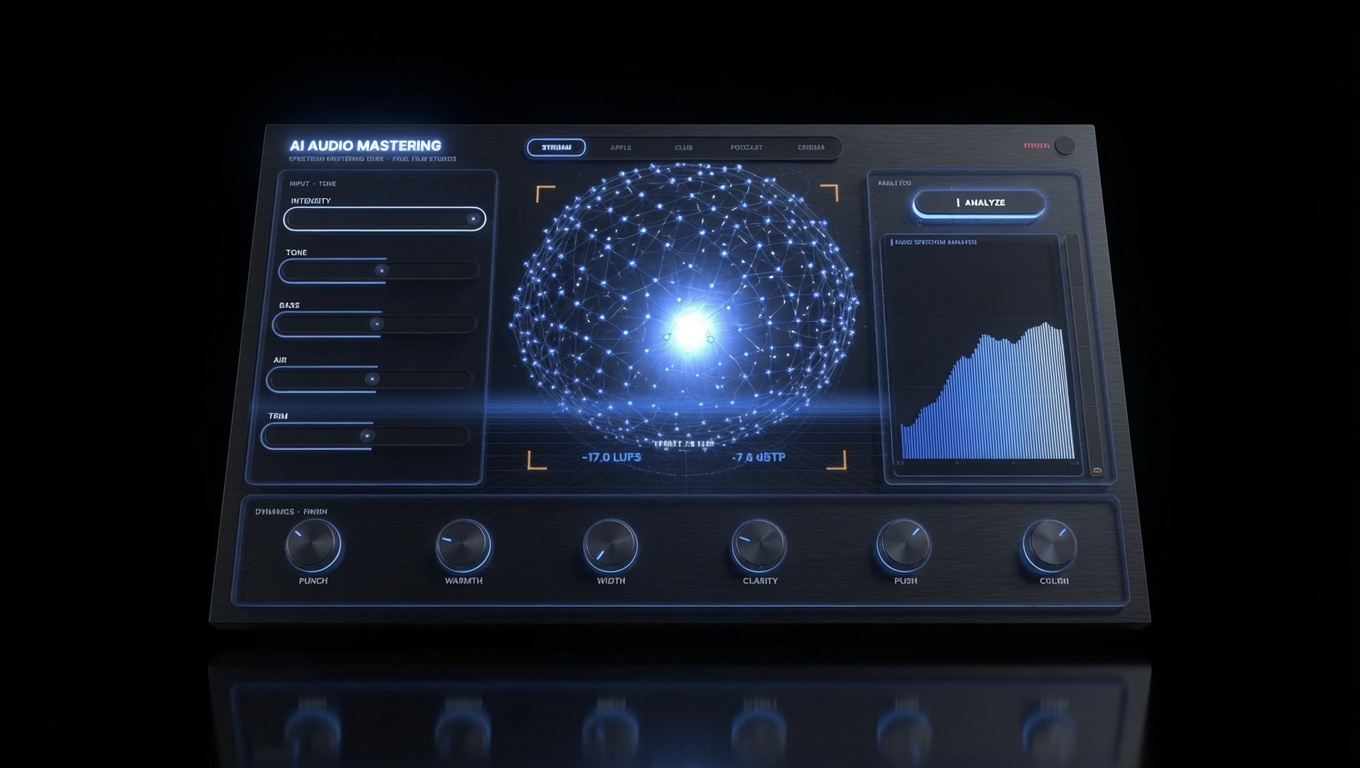
Press Analyze. Be Amazed.
The workflow is a single button. Press Analyze, and the AI engine runs a complete analysis of the audio — measuring integrated loudness against platform targets, profiling the spectral balance across 12 frequency bands, evaluating the dynamic range and transient character, and assessing the stereo width and correlation. From those measurements, it builds a complete mastering chain calibrated to the chosen destination: the EQ curve that corrects the tonal balance toward the reference, the limiter ceiling and release time that matches the platform's delivery specification, and the output gain that hits the target loudness without breaching the true-peak ceiling.
The result is immediate. Not a suggestion, not a starting point requiring manual calibration — a finished master, complete, ready to export. Editors who have never touched a loudness meter or a mastering limiter in their lives get a result that is technically correct for their platform and sonically polished in a way that was previously only achievable with dedicated mastering software or a professional mastering session.
Five Platform Destinations
Every streaming platform, broadcast network, and distribution channel has a different loudness target and a different expectation for the sonic character of the content it carries. AI Audio Mastering knows all of them.
- Stream — tuned to the integrated loudness targets used by major streaming video platforms. The dynamics and tone are optimized for consumer speaker systems, earbuds, and laptop audio — the real delivery chain for most streaming content.
- Apple — matched to Apple's platform specifications for Final Cut Pro and Apple TV delivery, with the loudness target and EQ profile appropriate for Apple's ecosystem.
- Club — a louder, more compressed target optimized for audio that needs to cut through in high-SPL environments. Enhanced low-end presence and compressed dynamics for maximum perceived loudness at volume.
- Podcast — tuned to the loudness standard and EQ profile that makes spoken word content clear, intelligible, and comfortable across listening environments, from studio monitors to earbuds to car speakers.
- Cinema — the widest dynamic range target, optimized for theatrical delivery where transient impact, dynamic contrast, and full-spectrum clarity are preserved at the expense of absolute loudness.
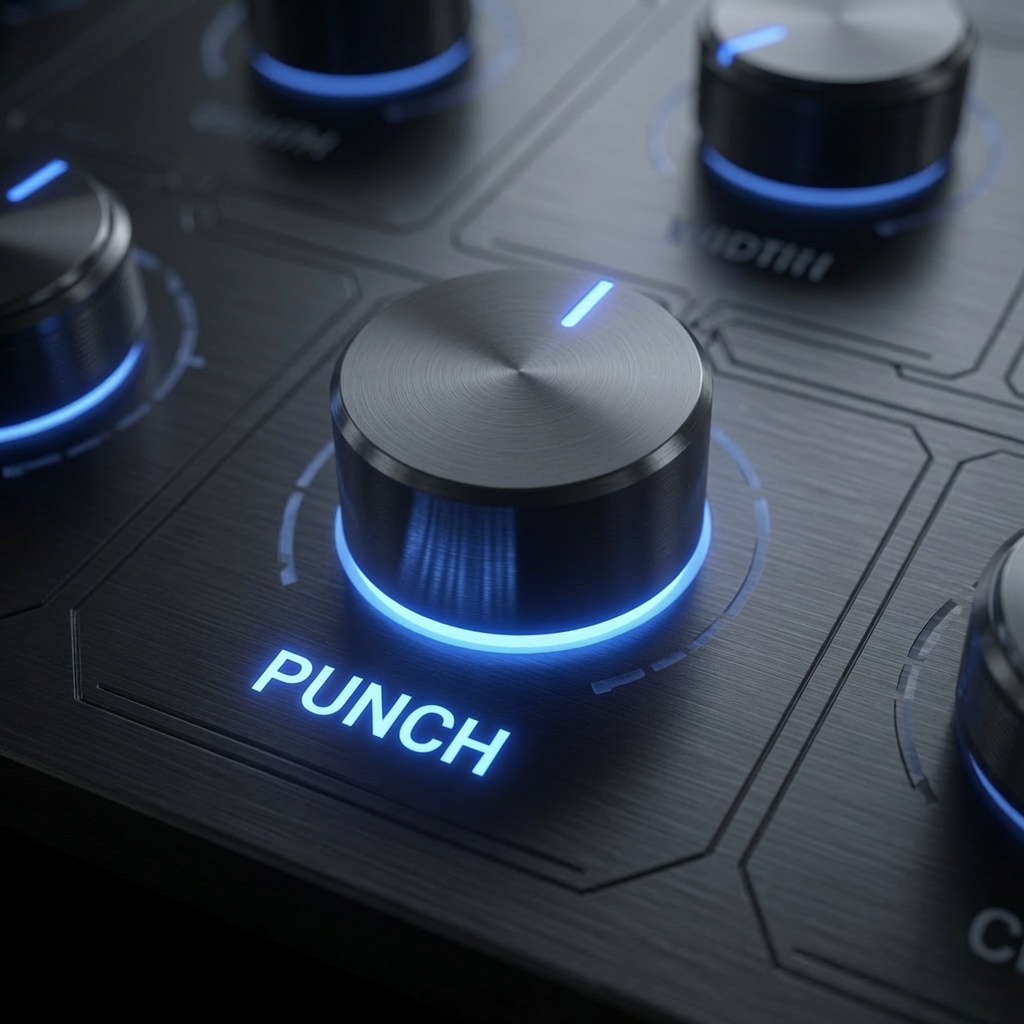
Six Controls for Fine-Tuning
After the AI Analyze pass, six manual controls give direct command over the sonic character of the master. Each targets a specific dimension of the sound without requiring any understanding of the underlying signal processing chain.
- Punch — enhances transient impact and energy. Turn up Punch and the audio hits harder — kick drums and snare transients become more physical, dialogue consonants gain attack, and the overall sense of energy and presence increases.
- Warmth — adds richness and analog-style character. Warmth emphasizes the lower-mid frequencies that give audio a full, natural, non-digital quality. The difference between a cold digital mix and one that sounds like it came off tape.
- Width — expands the stereo image. Wider settings push the stereo field outward, creating a more immersive listening experience. The Width control is implemented as a phase-coherent M-S adjustment — wide without creating mono incompatibility.
- Clarity — improves definition and detail. Clarity enhances the upper-mid and high-frequency presence that lets vocals and instruments articulate through the mix. The control that makes everything sound more expensive.
- Push — increases overall intensity and perceived loudness while maintaining balance and control. Push drives the limiter harder, squeezing more level out of the master without crossing the true-peak ceiling.
- Ceiling — sets the maximum output level and prevents clipping. The true-peak ceiling is the last gate before export. Set conservatively (-1.0 dBTP is the standard for streaming delivery) to ensure a clean, clipping-free master on every platform.
An Interface That Moves With the Music
The AI Audio Mastering interface is built around a music-reactive 3D core that responds to the audio signal in real time. The central visual element shifts color continuously as the audio plays: calm blue at safe output levels, warming through orange as the signal approaches the ceiling, flaring red the instant a true-peak event would exceed the limit. The color state is an immediate, at-a-glance confirmation of whether the master is operating within its target range without requiring the editor to watch a numerical meter.
A real-time spectrum analyzer displays the frequency distribution of the processed output continuously, breathing with every frequency peak as the audio plays. The spectrum display is not a static measurement — it is a live picture of what the mastering chain is doing to the audio at every moment, updating at full framerate in real time.
"Mastering used to be the part of the process that video editors couldn't do — not because it's conceptually difficult, but because it required specialized software, a reference-calibrated room, and ears that had spent years learning to hear what a properly mastered record sounds like. AI Audio Mastering removes all of that friction. Press Analyze, pick your destination, done. The AI engine knows what each platform sounds like. You don't have to."
— Dave Austin, Founder & CEO, Pixel Film Studios
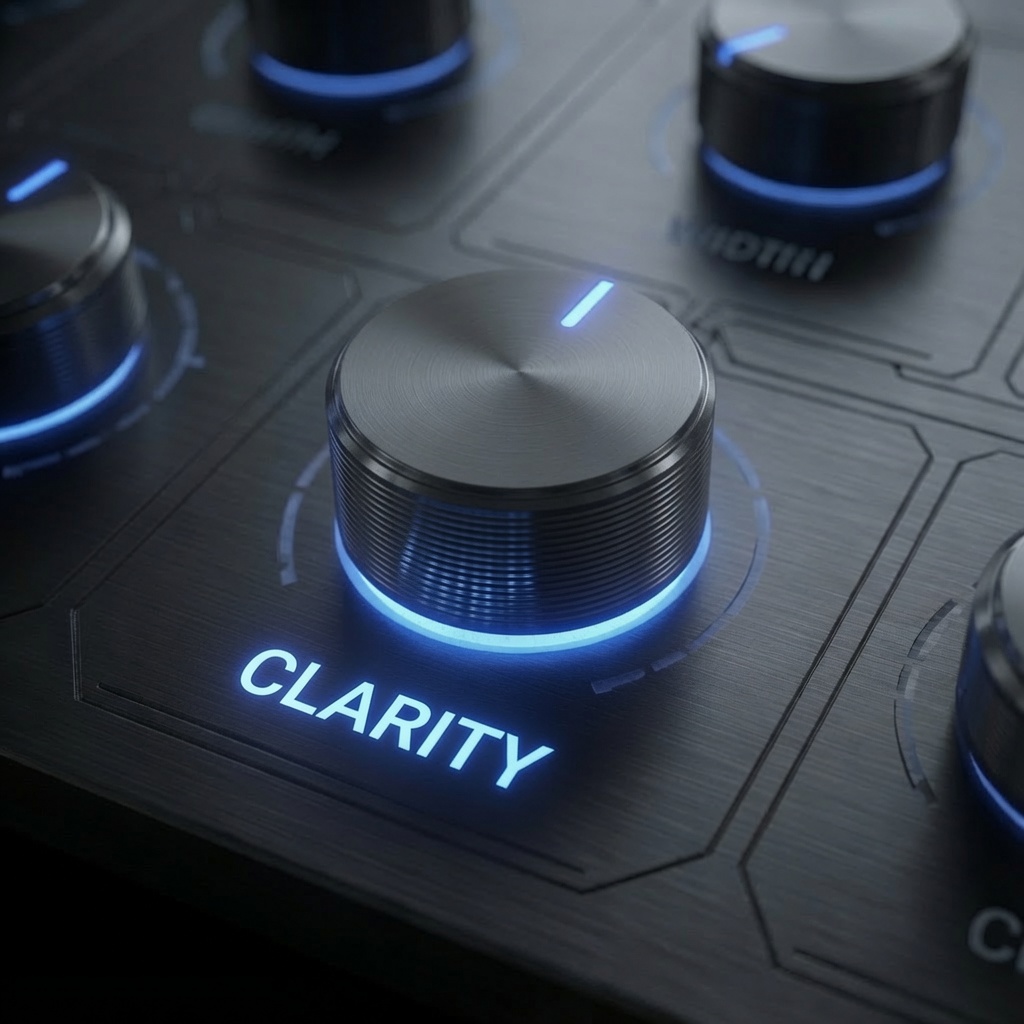
12-Band Match-EQ and True-Peak Limiting
Under the interface, the mastering chain that the AI configures is built from serious signal processing. The 12-band match-EQ applies frequency correction across the full audible spectrum at a resolution that can address the tonal coloration introduced by untreated recording spaces, consumer microphones, and narrow-room monitoring — the kind of subtle spectral problems that make audio sound small, harsh, or boxy without any single frequency being obviously wrong. Twelve bands provide enough resolution to correct a complex spectral profile while leaving the intentional tonal character of the performance intact.
The true-peak limiter enforces the output ceiling at the intersample peak level — not just the sample peak — which is the correct measurement for streaming delivery. Streaming encoders (AAC, MP3, Ogg Vorbis) can create intersample peaks above the sample ceiling during encoding. A true-peak limiter prevents those artifacts. Standards-based loudness metering provides integrated LUFS measurement for delivery compliance verification.
Availability and Pricing
AI Audio Mastering is available today at pixelfilmstudios.com for $39.95. One-time purchase, no subscription. Requires macOS Ventura 13.0 or later and Final Cut Pro 10.8 or later. Universal binary — native Apple Silicon and Intel. Installs via the PFS Installer app or by manual download from the customer account page.
About Pixel Film Studios
Founded in 2011, Pixel Film Studios is the leading developer of professional visual effects, titles, transitions, and generators built exclusively for Apple Final Cut Pro and Motion. Over the past 14 years, the company has shipped more than 2,000 products and fulfilled millions of orders for video editors, content creators, broadcast designers, and post-production professionals in over 100 countries. Learn more at pixelfilmstudios.com.
Press Contact
Colin Bauer
Director of Communications, Pixel Film Studios
[email protected]